We spent one day visiting Akihabara, Harajuku, and Shinjuku.
- Akihabara’s famous curry soba shop inside the station
- First-time experience at Ichiran Ramen and matcha sweets in Harajuku
- A must-visit spot in Shinjuku for handicraft lovers & limited-edition character goods
Even in cities well-known as tourist destinations, a slight change in perspective can lead to discoveries like, “I didn’t know this place existed!”
I’d like to suggest a route with recommendations for breakfast, lunch, cafes, and shopping.
Breakfast at Soba-dokoro Shintagoto
First, I’ll try the curry from a soba shop I’d been curious about. It’s located on the Chiba-bound platform of the Sobu Line at Akihabara Station, just a little further down from Milk Shop Raku, which I visited last time. You can access it directly from inside the station without exiting the ticket gates.
Exterior and Interior of the Shop
It blends in with the station and is set at a diagonal.

At first glance, it seems like just another ordinary standing soba shop inside the station… but their steak curry is surprisingly popular.
However, I visited at 10 a.m., and wasn’t quite in the mood for steak, so I decided to have curry rice instead.
I bought a curry ticket from the vending machine at the entrance and handed it to the staff, who prepared it right on the spot. When I went, there were about two people in line, so I waited just a short while. The ticket machine also accepted Suica.


Inside, all the seats were counter seats. For me (153 cm tall), the chairs were a bit high, so I climbed up onto one and handed my meal ticket to the staff. Although it had the feel of a standing soba shop, you could actually sit down and eat properly.
Trying Piping Hot Soba Shop Curry in the Middle of Summer
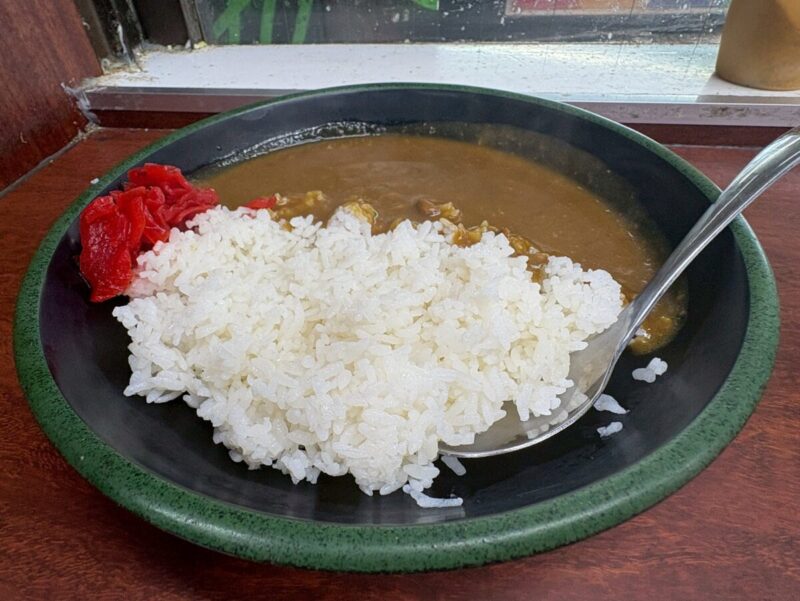
That day, the temperature had already exceeded 33°C.
Looking around, I noticed that everyone except me was eating cold soba. In the midst of that, I was the only one enjoying a steaming hot curry.
I like my curry on the mild side, but even for me, this one—while having a slight spicy kick—was the kind of flavor that becomes addictive. For those who like spicy curry, it might be just the right balance. The taste was a simple curry infused with dashi broth, and because it was so easy to eat, I finished it quickly without even realizing it.
They Also Had Steak Curry Bread
After finishing my meal, I noticed that they also offered a limited-quantity “Steak Curry Bread.” It might have been a good idea to try that as a way to sample the steak flavor.

| Restaurant Name | Shintagoto |
| Address | Inside ticket gates, 4th Floor, Chuo-Sobu Line (towards Chiba), Platform 6, mid-section, 1-17-16 Sotokanda, Chiyoda-ku, Tokyo 101-0028, Japan |
| Business Hours | 6:30 AM – 11:00 PM |
| Closed | None |
| Access | |
| Parking | None |
| Map |
Lunch in Harajuku – Taking the Yamanote Line for Ichiran Ramen
After filling my stomach with soba shop curry, I took the Yamanote Line to Harajuku.
From Akihabara to Harajuku, it’s 14 stations on the outer loop of the Yamanote Line (towards Tokyo and Shinagawa). If you go down the stairs next to “Shintagoto” inside the station, you’ll arrive directly at the Yamanote Line platform, making the transfer smooth and easy.

After about 30 minutes rocking along on the train, I arrived at Harajuku Station.

When I stepped outside from the Omotesando Exit, the sky was overcast. Still, even with the clouds, it was hot.
Exterior and Interior of the Shop
After about a 4-minute walk from Harajuku Station, I arrived at Ichiran Harajuku.

Actually, this was my very first time at Ichiran. Ever since I saw it featured on the Ega Channel, I had always wanted to visit.
Being in a tourist area, I’ve heard that depending on the time of day, there can be lines of international visitors. However, I came at 11 a.m. on a weekday and was able to get inside right away.
How to Order at Ichiran
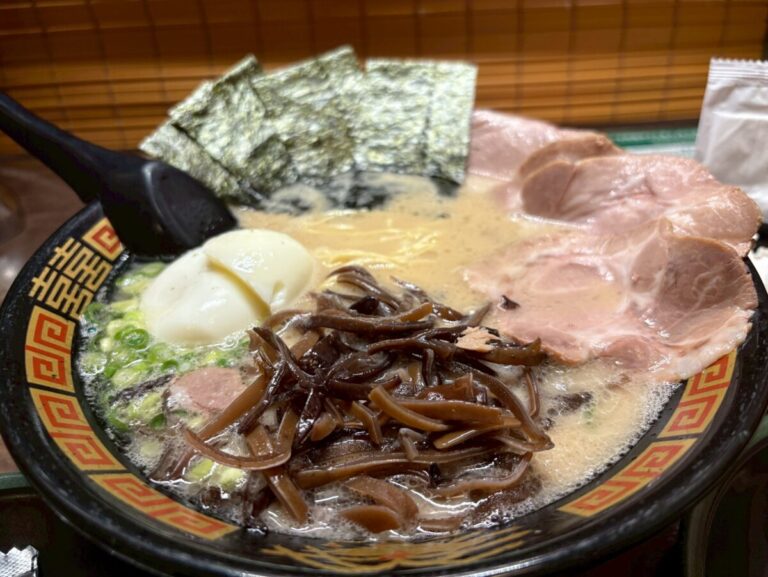
From the menu options lined up on the ticket machine, I chose the set on the very first button, which seemed to be the shop’s recommendation — the “ICHIRAN 5” set. It’s prominently displayed on the ticket machine. If you’re unsure what to get, this is the one to choose.
The set includes ramen, chashu (roast pork), kikurage mushrooms, a soft-boiled egg, and seaweed — a fully loaded, slightly more luxurious option. The ticket machine accepts cash only.


After purchasing a meal ticket, please take any available seat
The seats are in a semi-private, partitioned style, allowing you to enjoy your meal without worrying about the gaze of others. There were about two parties ahead of me.
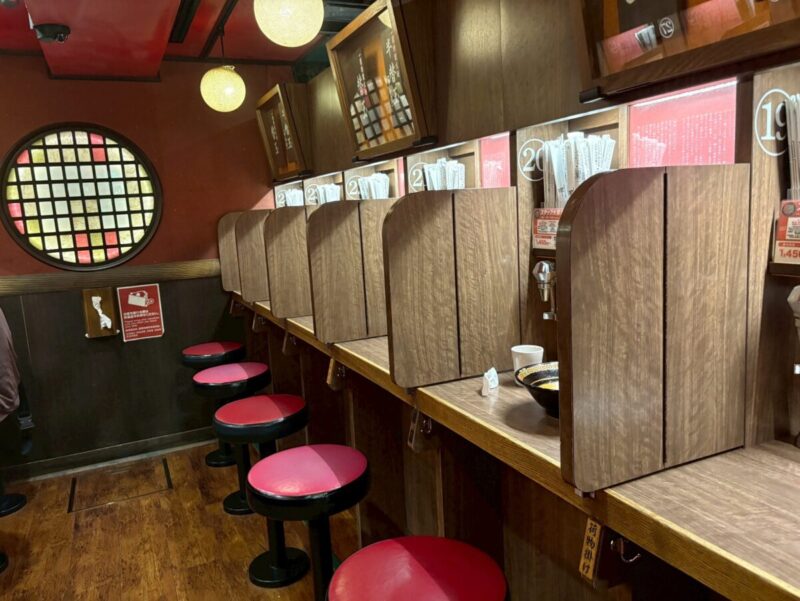
The chair height was just right, making it more comfortable than the soba shop earlier.
Since it was my first time, I carefully looked over the order sheet. After some thought, I chose “no” for the Original Spicy Red Sauce, and kept everything else at the standard settings.

One of the unique features of this shop is that the staff gently lower the curtain, allowing you to focus on your ramen without making eye contact.
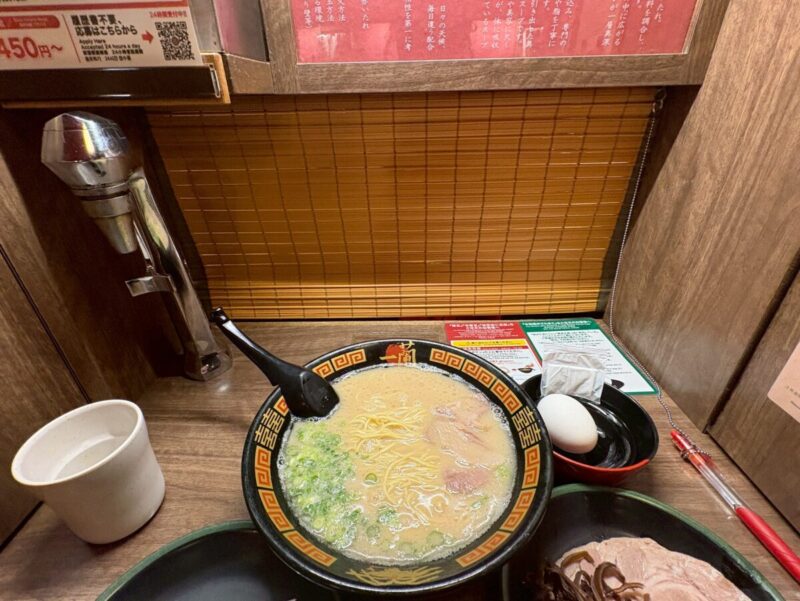
Trying Ichiran
As someone who usually prefers shio (salt-based) ramen, I’ve always felt a bit hesitant about tonkotsu ramen… but Ichiran’s broth had very little odor and was surprisingly delicious. The thin noodles went down smoothly, and I found myself eating more and more without stopping.
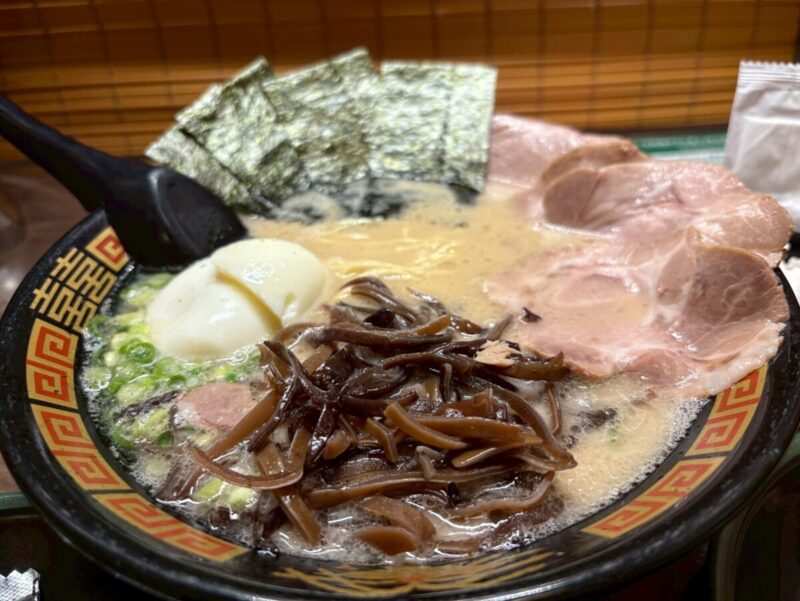
There were so many extra slices of chashu that I wondered, “Might this be a bit too much?” — but the flavor wasn’t heavy at all, and I finished them before I knew it. The toppings were also fun to arrange myself, giving it the feel of a bowl I had personally completed, which I really enjoyed.
How to Order Ichiran’s Dessert “Matcha Almond Jelly”
After having curry in the morning and then finishing a bowl of Ichiran ramen, I was, of course, quite full.
Even so, I couldn’t help being curious about Ichiran’s signature dessert, “Matcha Almond Jelly.”
To order, simply mark it on the additional order sheet, place your money on the counter, and press the call button. Your change will be returned properly.
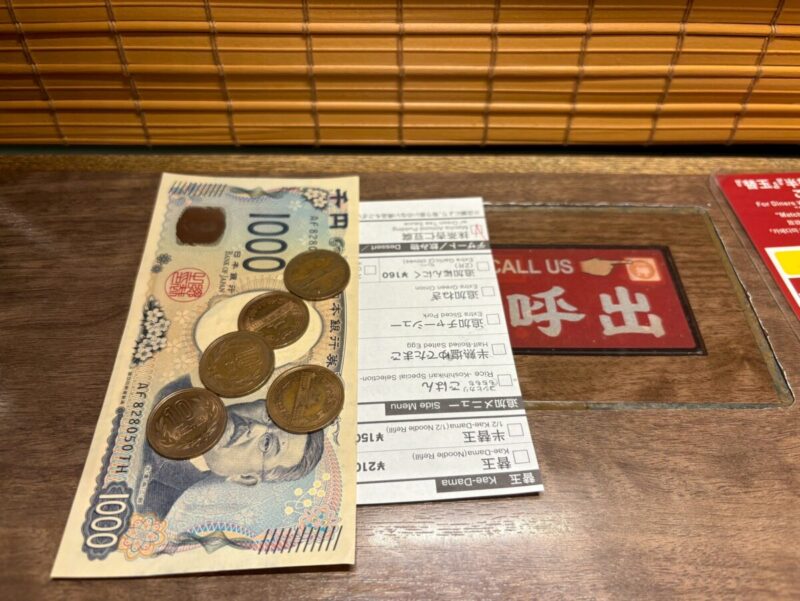
Tried the Matcha Almond Jelly
The “Matcha Almond Jelly” was served in a small, elegant dish.
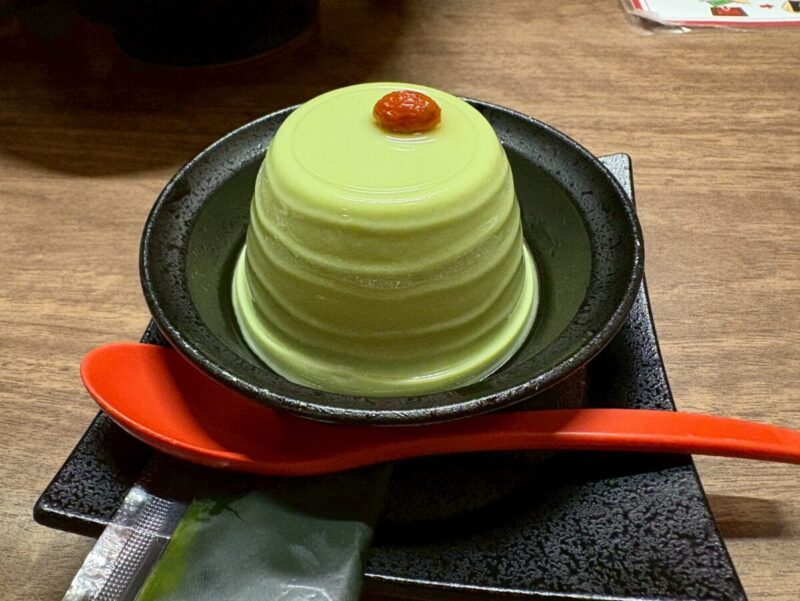
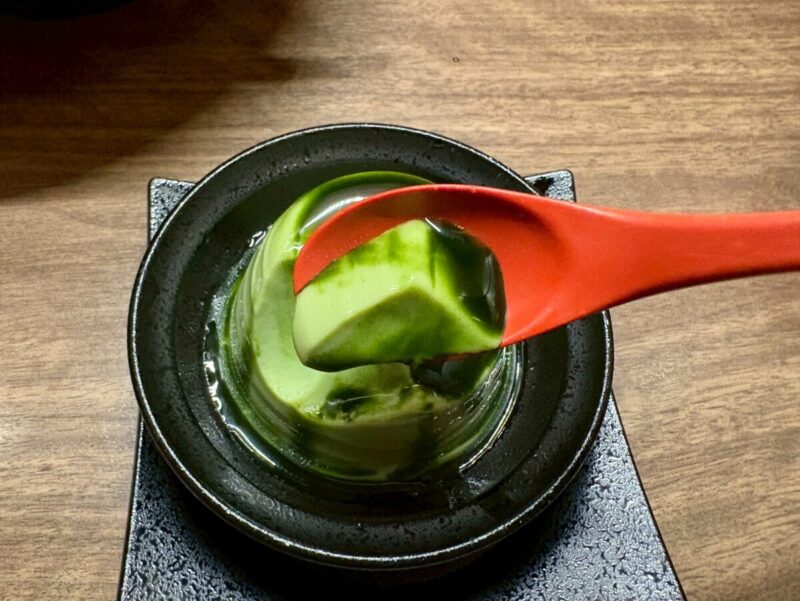
Although it’s “matcha,” there was no bitterness at all, and the gentle flavor of the almond jelly spread softly.
With the sauce, it had a hint of matcha while leaning toward a sweeter taste. I definitely preferred it with the sauce.
| Restaurant Name | Ichiran Harajuku |
| Address | 2F, Sanpo Sogo Building, 6-5-6 Jingumae, Shibuya-ku, Tokyo, Japan |
| Business Hours | 9:00 AM – 10:00 PM |
| Closed | None |
| Access | 3 minutes on foot from JR Harajuku Station |
| Parking | None |
| Map |
After your meal, you may leave your dishes as they are and exit the restaurant.
At Ichiran, there is no special action required after finishing your meal. You can leave your ramen bowl on the counter and simply exit your seat.

