
JR West partners with JAL and ANA

Railways and airlines have traditionally been competitors, competing for the same passengers. However, in recent years, collaboration has been increasing alongside the growth of inbound tourism demand in Japan.

For example, in 2021, overseas JAL Mileage Bank members became able to exchange their miles for the JR-WEST RAIL PASS. This marked one of the initiatives jointly promoted by JR West and JAL to encourage travel across western Japan.

Looking ahead to the 2030s, the two companies are working to directly integrate their booking systems, allowing travelers to arrange both rail and air transportation in a single booking process.

Previously, travelers needed to book flights first and then separately reserve Shinkansen or limited express trains. With this new system, international visitors to Japan will be able to organize their entire journey on one platform.

As an early example, dynamic package products combining flights between Haneda and Nanki-Shirahama with JR West’s Limited Express Kuroshio and regional rail passes are already being introduced.

While flights are generally slightly faster in terms of travel time, how do they compare on price?

For example, on the Osaka–Fukuoka route, last-minute airfare and the standard Shinkansen fare are roughly similar, both costing around ¥16,000. However, if flights are booked early and outside peak travel periods, airfare can sometimes drop to around ¥9,000, making air travel the cheaper option depending on the conditions.

Under the Japanese government’s goal of attracting 60 million international visitors by 2030, stronger integration between transportation and tourism is becoming increasingly important.

One key challenge will be how to combine and coordinate relatively stable Shinkansen fares with airline prices, which can fluctuate significantly depending on timing and demand.

Currently, around 70% of inbound travelers’ overnight stays are concentrated in the Tokyo metropolitan area, Kansai, and Nagoya, making regional distribution another major issue.

Attention is now focused on whether collaboration between railways and airlines can help solve this challenge by encouraging international visitors to travel beyond Japan’s major urban centers.

2026年5月2日
鉄旅ライフ編集部
過去のコラムはこちら

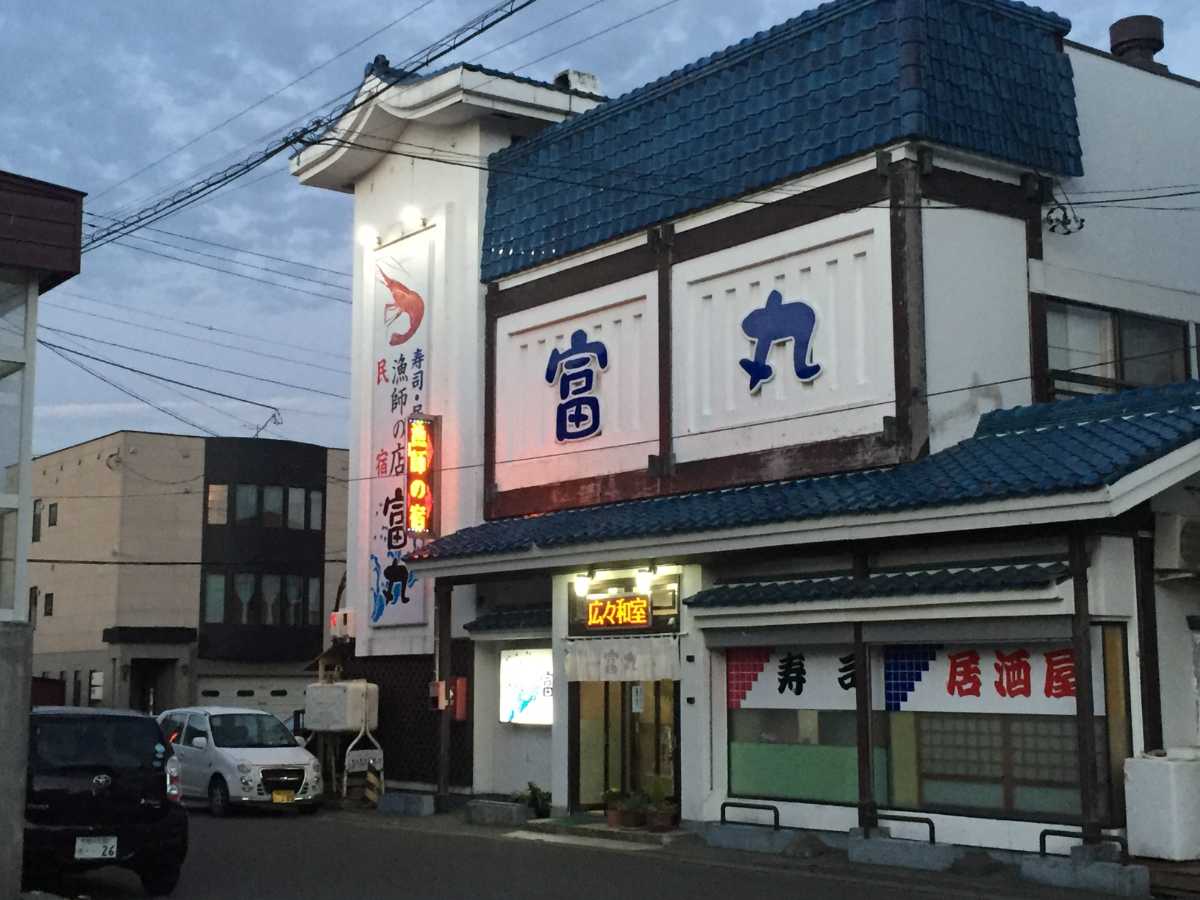
Tomimaru – A Fisherman’s Seafood Spot in Rumoi Serving Fresh Kaisen-don with a Portside Atmosphere

We’d like to introduce Tomimaru, the fisherman’s restaurant, a local favorite known for its hearty seafood dishes made with an abundance of fresh catch from the sea.

In this article, we’ll cover everything from the atmosphere inside the restaurant to recommended menu items and access information, giving you a complete guide to this must-visit spot.

Exterior and Interior

Tucked away in a quiet alley with the charm of an old-fashioned neighborhood, the restaurant features a simple wooden sign as its landmark.

Inside, you’ll find both counter and table seating in a calm, modern Japanese-style setting.

Tomimaru – Fisherman's Seafood Restaurant

Recommended Dishes

We tried the tuna rice bowl and raw Pacific saury sashimi. The sashimi had a rich, buttery texture with just the right amount of fat. Each bite released a deep umami flavor that lingered beautifully. It’s a simple dish, but the freshness truly stands out.

Sashimi of raw Pacific saury
Tuna Rice Bowl Set
Tuna Rice Bowl

Tasting Experience

In addition to the tuna rice bowl shown in the photo, we also tried salmon and other selections. Every slice of fish was thick, generously cut, and incredibly fresh. The premium seafood chirashi bowl featured local specialties like sweet shrimp, sea urchin, octopus, and scallops — each one absolutely delicious.

Restaurant Name Tomimaru – Fisherman’s Restaurant
Address 3-3-10 Kaiuncho, Rumoi, Hokkaido
Opening Hours 11:00–14:00 / 16:30–20:00
Closed
Access About 1-minute walk from Engan Bus stop
Parking Available
Map