
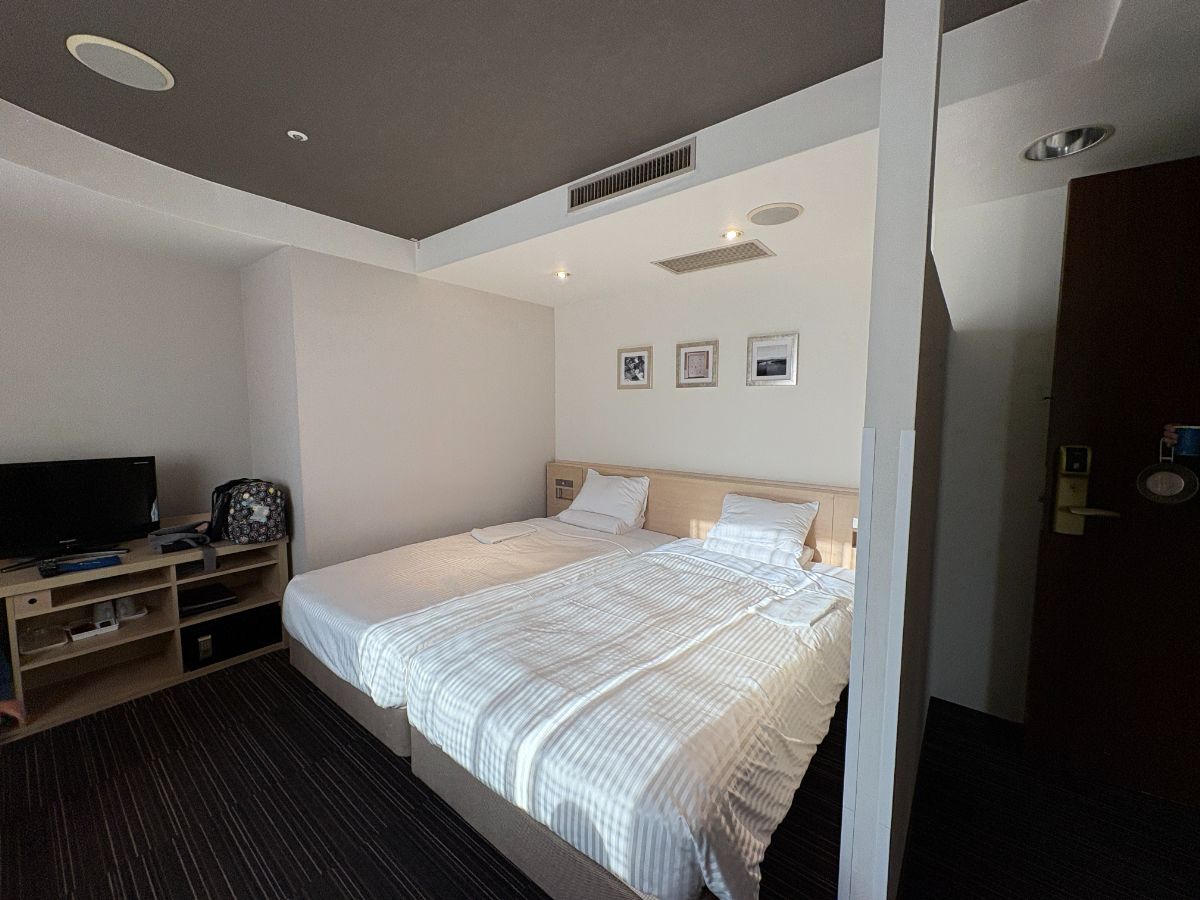
Because we often stay at hotels while traveling, I decided to briefly summarize what I learned after asking hotel staff about how garbage separation is usually handled in hotels.
First of all, garbage disposal rules differ depending on the region. The way hotels handle waste also varies from one property to another, and it seems that larger hotel chains and major companies tend to separate waste such as plastic more carefully.Waste disposal methods can also differ depending on the waste management company and the details of the contract they have with the hotel. For example, food containers with oil stains or leftover food — such as convenience store bento containers — are often treated as burnable garbage. However, the final sorting process is usually handled by the commercial waste disposal company contracted by the hotel.
In many cases, hotel rooms only have a single trash bin. However, some hotels provide multiple bins or display instructions for separating garbage. In those situations, it is best to follow the hotel’s guidelines.
Even when no specific instructions are provided, separating waste into categories such as:
- Burnable garbage
- Non-burnable items such as metal
- Glass bottles
- Cans
- Plastic bottles (PET bottles)
can help make the collection process smoother for the housekeeping staff.
In many hotel rooms, there is only a single trash bin available, so if necessary, you may be able to ask the hotel for extra garbage bags.
There is also a small point to keep in mind regarding used towels.
Collected towels are gathered together with bed sheets and other linens before being sent to a linen service company. Housekeeping staff often need to clean dozens of rooms within a limited amount of time, so when used towels are scattered throughout the room, even collecting them can take considerably more time.
In particular, situations such as:
- Towels left hanging on hangers
- Towels clipped onto drying hangers
- Towels left in different parts of the room
can make checking and collecting them more time-consuming for the staff.
If used towels are neatly folded and returned to their original place, it can become difficult to distinguish them from unused ones. Keeping used towels together in a clearly recognizable way helps make the cleaning process smoother.
All used towels are collected and sent to a linen service company for washing. After entering the room, staff first collect towels together with bed sheets and other linens. When towels are scattered throughout the room, however, the work becomes difficult.Towels may be left hanging on hangers, clipped onto drying hangers, or placed around different parts of the room, and even collecting them can take quite a lot of time. Housekeeping staff clean dozens of rooms quickly, so this can take away valuable working time.
What Happens to Trash That Has Not Been Separated?
In most cases, garbage collected from hotel rooms is sorted by hotel staff during the collection process.
For example, even if there is only one trash bin in the room, bottles, cans, and plastic bottles inside the bin are often separated to some extent when the garbage is collected.
However, housekeeping staff need to clean dozens of rooms within a limited amount of time, so it is difficult for them to carry out detailed waste sorting inside each guest room.
Where Should You Throw Things Away?
As mentioned earlier, most hotel rooms only have a single trash bin, mainly for reasons related to room appearance and limited space. In such cases, it is generally fine to place ordinary burnable trash into the bin.
Non-burnable items can be gathered together and left beside the trash bin. Bottles and cans should be emptied and placed near the bin as well.
Actions That Make Things Easier for Hotel Housekeeping Staff
Basic Garbage Separation
- Roughly separate trash into “burnable garbage,” “non-burnable garbage,” and “plastic bottles.”
- It is easier to recognize plastic bottles, cans, and glass bottles when they are grouped together beside the trash bin.
- Always empty drinks before throwing containers away.
- Nearly empty bottles left on tables can make staff unsure whether the guest still intends to drink them or throw them away. If you want to dispose of them, empty them first and place them near the trash bin.
- Items gathered beside the trash bin are generally recognized as garbage, so be careful not to place important belongings there by mistake.
- If you are unsure, leaving a short note such as “Trash” or “Please do not throw away” can help avoid confusion.
Things You Should Avoid Doing
- Using laundry bags as garbage bags
- Dyeing your hair inside the room
- Throwing or spilling large amounts of alcohol, such as during beer-splashing celebrations
- Doing anything that may leave strong odors behind
- Actions that may clog the bathroom drain
- Leaving towels or pajamas scattered across walkways inside the room
While very few guests would probably do something like a beer-splashing celebration inside a hotel room, hotel staff said that such cases have apparently happened before.
There are also cases where ramen soup was poured down the drain without enough water afterward, which caused odors to remain.
What Should You Do With Leftover Ramen Soup?
If possible, it is better to finish the soup completely, but sometimes some may still remain.
In that case, place toilet paper or tissues inside a plastic bag and let them absorb the soup. Then tie the bag tightly so odors do not leak out, and dispose of it as burnable garbage.
Where Should You Leave Towels and Pajamas?
Leaving towels hanging on hangers or clipped onto drying hangers can make them take extra time to collect.
- Used towels should be placed on the edge of the bathtub rather than inside the tub itself.
- Throwing towels into the bathtub allows them to absorb water and become heavy, which increases the cleaning workload.
- Pajamas or yukata do not need to be folded. Even if they are folded, staff still need to unfold and check them. It is also better not to button them up.
- Used pajamas can be placed together with towels near the edge of the bathtub so they are easy to recognize and collect.
Japanese bathtubs are designed with bathing in mind, so they tend to be deeper than those in hotels overseas.If towels are placed inside the bathtub, it can increase the workload for housekeeping staff.
About Cleaning Issues
- In Japanese hotels, even something as small as a single strand of hair being left behind is generally considered unacceptable
- If something concerns you, it is perfectly fine to inform the hotel staff without hesitation
- It is also recommended to report stains, damage, or missing amenities so that you are not mistakenly suspected of causing them yourself
Sharing Guest Information
Hotels often keep more detailed notes than many guests might expect.
Positive information may also be shared among staff, such as guests who:
- Separate their garbage properly
- Treat staff politely
- Keep the room easy to clean
- Greet hotel staff respectfully
On the other hand, negative information may also be shared, including:
- Damage or heavy staining
- Frequent complaints
- Problems related to guest manners or behavior
Cleaners and Showing Appreciation to Hotel Staff
In Japan, cash tips are not necessary. In fact, they can sometimes be inconvenient to handle.
- Written thank-you message
- Leaving a few individually wrapped sweets
- Expressing gratitude directly
Even if there is no opportunity to thank staff in person, or if you feel a bit shy, leaving individually wrapped sweets with a note can be shared among staff and is often appreciated.
Characteristics of hotel housekeeping in Japan
- The alarm on clocks is reset every time
- The time on clocks is checked for accuracy
- There is a strong philosophy that “a clean room itself is hospitality”
Summary and the most important point
Hotel housekeeping staff clean a large number of rooms within a limited amount of time.
Small considerations such as separating trash slightly or gathering used towels together can significantly reduce their workload. Above all, it is said that the most appreciated thing is simply expressing gratitude by saying “thank you.”
It would be ideal if both guests and staff could spend their time comfortably and pleasantly.

