“Oomawari travel” is a unique rail hack in Japan.
It uses a special rule set by Japan Railways Group that allows you to travel within a designated area while being charged only for the shortest possible route, no matter how far you actually go.
In practice, this means you can buy a ticket for just a short distance—sometimes as little as around 155 yen between neighboring stations—and spend the entire day riding trains, traveling hundreds of kilometers across the network.
It almost feels like a magic trick.
However, this system only works if you strictly follow one essential rule known as the “no backtracking rule” (hitofudegaki).
You must not pass through the same station more than once or travel back along the same track, and exiting the ticket gates even once will require you to pay the full fare for the distance traveled.
But if you follow all the rules, something incredible happens:
You can start in Tokyo, take a massive detour through places like Chiba, Gunma, or Kanagawa, travel for hundreds of kilometers, and still only pay the base fare for a short trip between two nearby stations.
This is why “Oomawari travel” has become a popular hidden hack among train enthusiasts in Japan.
- The 3 Golden Rules (That’s All You Need)
- Oomawari Travel in Japan: Is It Possible with a Toddler? (Limited Express Test)
- Route for This Oomawari Trip
- Can You Use Limited Express Trains During an Oomawari Trip? (With a Toddler)
- Inside the Green Car of a limited express train
- Oomawari travel toward the Choshi area
The 3 Golden Rules (That’s All You Need)
1. No backtracking
No repeating stations or reversing direction.
2. Stay inside the gates
Exiting the gates ends the trip and triggers full fare.
3. Stay within the designated area
Your route must remain inside the allowed zone.
Planning a valid route can be surprisingly complex.
Make sure to carefully research your route in advance before attempting this trip.
Oomawari Travel in Japan: Is It Possible with a Toddler? (Limited Express Test)
This time, I planned a long-distance loop route assuming the use of limited express trains.
On my previous trip using the Kyūn Pass, I had to wake up very early to catch the first train, which was honestly exhausting. So today, I decided to take it easy and give myself more time.
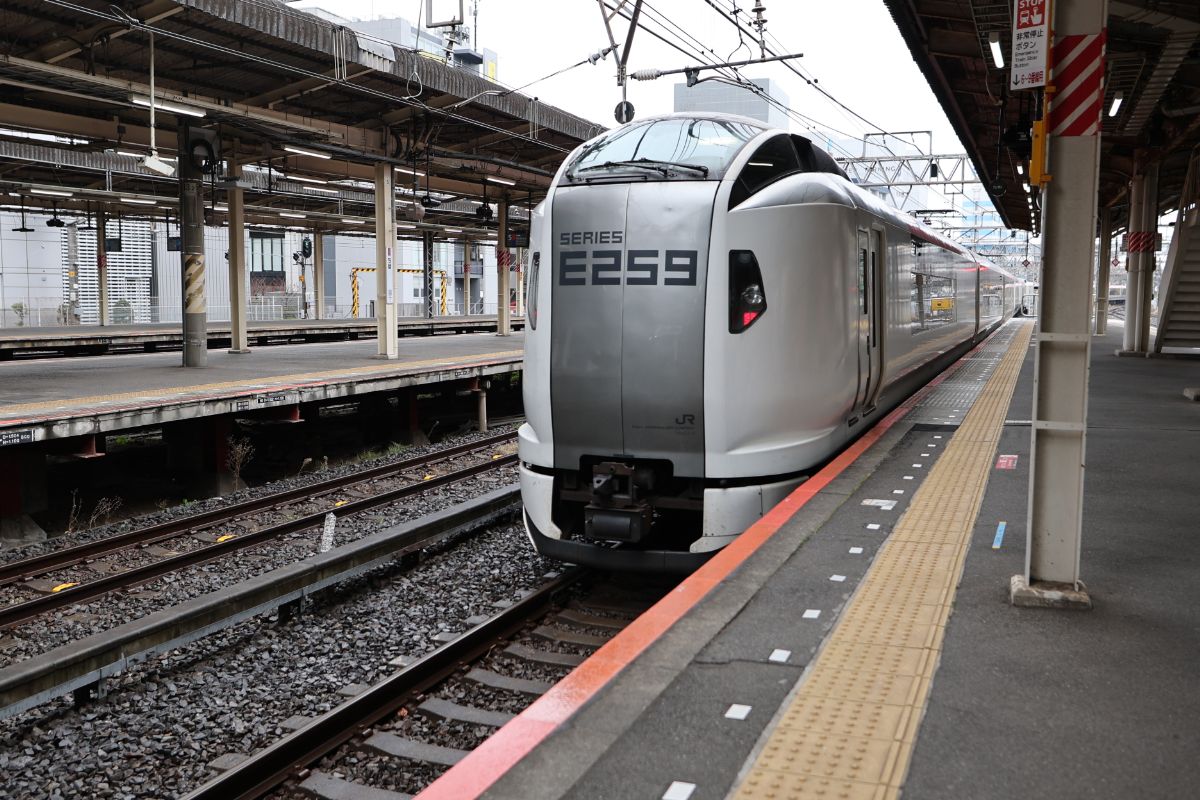
I headed to Chiba Station to catch the Shiosai No. 3, departing at 10:40 AM.
The plan was to spend about an hour on the limited express Shiosai and enjoy a boxed lunch during the ride.
But the real challenge was simple:
Can I survive an hour with a 3-year-old on my lap?
Since we arrived a bit early, we took some time to explore Chiba Station.
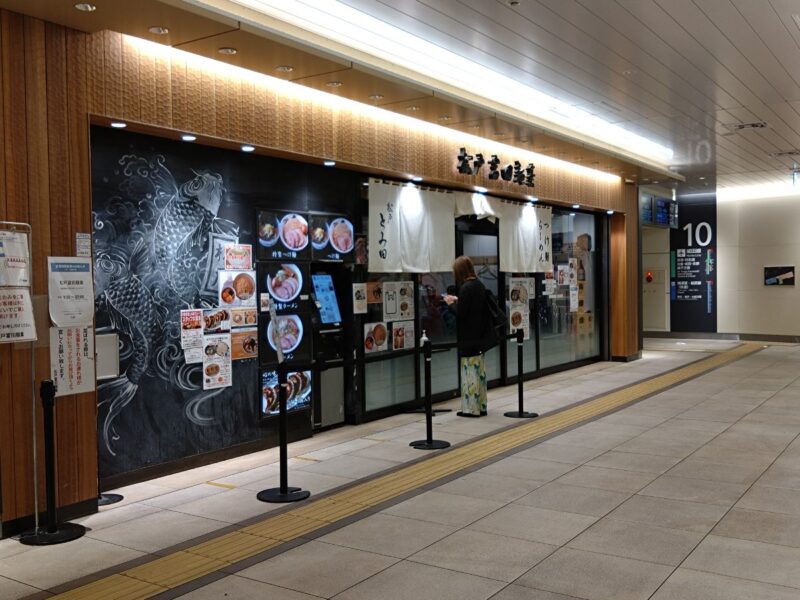
It was my first time visiting the station by train, and I was surprised to find Tomita Ramen there.
Tomita is an extremely popular ramen shop, especially known for its tsukemen (dipping noodles), and it usually requires a long wait.
However, it was just after 10 AM on a weekday, and there were only one or two people waiting.
Or perhaps they weren’t even waiting—just deciding what to order.
Route for This Oomawari Trip
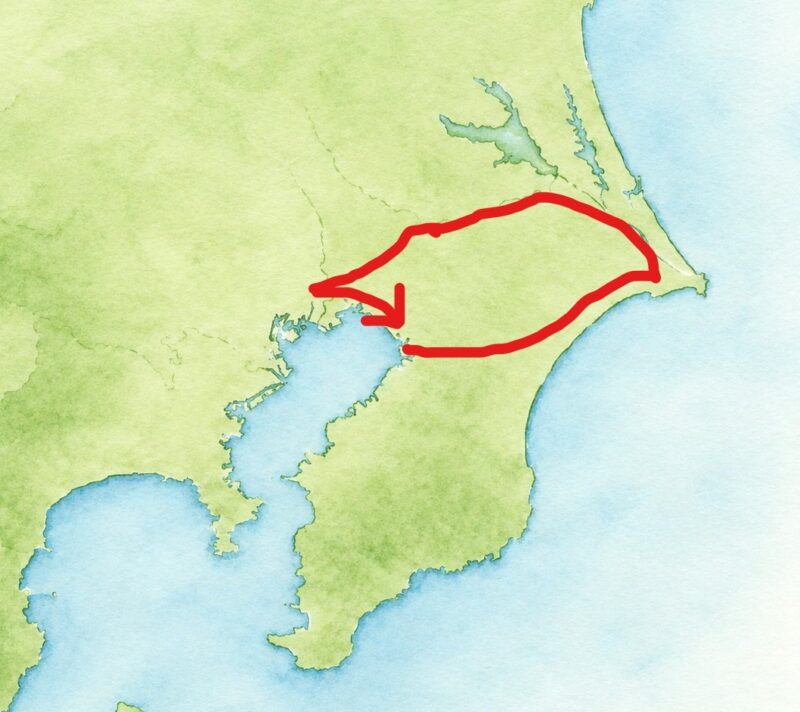
From Chiba, I headed toward the Choshi area.
The key point is that going all the way to Choshi would invalidate the Oomawari trip, so you need to get off at Matsugishi instead.
Another important factor is the connection when transferring from a limited express to a local train.
Stations with short transfer times included Yokoshiba and Iioka, but without thinking too much, I booked a limited express ticket all the way to Iioka using Ekinet.
I realized later that this was a mistake.
- Chiba to Yokoshiba: 47.6 km
- Chiba to Iioka: 67.1 km
Based on JR’s fare system, this made a significant difference.
Since the distance slightly exceeded 50 km, it fell into the 50–100 km fare bracket, which increased the base fare by a few hundred yen.
On top of that, I chose the Green Car, so the limited express surcharge came to 1,690 yen.
Can You Use Limited Express Trains During an Oomawari Trip? (With a Toddler)
To be honest, I wasn’t entirely sure about this at first, but based on what I researched, it seems that you can use limited express trains during an Oomawari trip.
However, since the whole point of Oomawari is to keep costs low (and let the child enjoy the ride), I wanted to avoid paying an additional child fare.
While traveling with a child is possible, securing a separate seat for them would require not only a limited express ticket for that section, but also a child base fare ticket for part of the journey.
So this time, I only reserved one seat.
My child either sat on my lap or stood during the ride.
Oomawari Travel: Paper Ticket or Suica?
I used Mobile Suica for this trip.Standard Suica cards can generally be used in the same way as Mobile Suica. However, be aware that this may not apply to Welcome Suica, and it’s unclear whether the same method works with it.
This was my second Oomawari trip, and I didn’t run into any issues using Mobile Suica.
If you use a paper ticket, however, you may get stopped at the ticket gate if more than five hours pass on what is supposed to be a short-distance journey.
Either way, it’s a good idea to keep a record of your route so you can clearly explain your trip and that you’re doing Oomawari travel if anything comes up.
On-board Ticket Inspection
I purchased my limited express ticket through Ekinet and didn’t encounter any issues during the on-board inspection.
After boarding, I placed my luggage on the seat and immediately took my child to the restroom, so I’m not sure whether the inspection had already taken place during that time or if it didn’t happen at all.
Shiosai Limited Express Green Car Review: Traveling with a Toddler in Japan
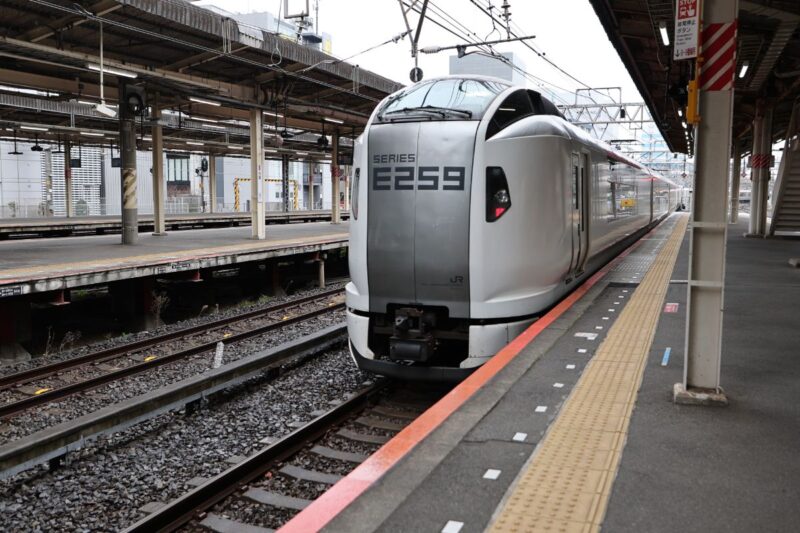
Since I had plenty of time today, I brought a homemade bento and boarded the train.On limited express trains in Japan, children can ride without a separate fare if they sit on an adult’s lap.But the real question was whether it’s actually possible to eat a meal in a Green Car seat while holding a 3-year-old.So this time, I decided to test it myself and see how practical the seat and space really are.
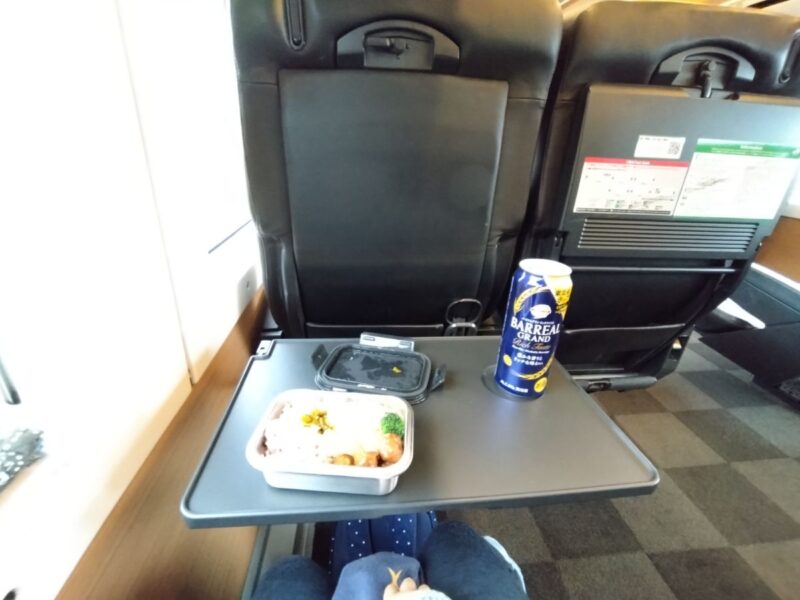
With a 3-year-old sitting on my lap, there was barely any space between us and the table. It was extremely tight.
This isn’t something you can manage for long—just a few minutes is probably the limit.
Setting up the bento itself also requires quite a bit of movement, which makes things even more difficult.If you sit by the window, you at least have a bit of space to place small items, so choosing a window seat is essential.
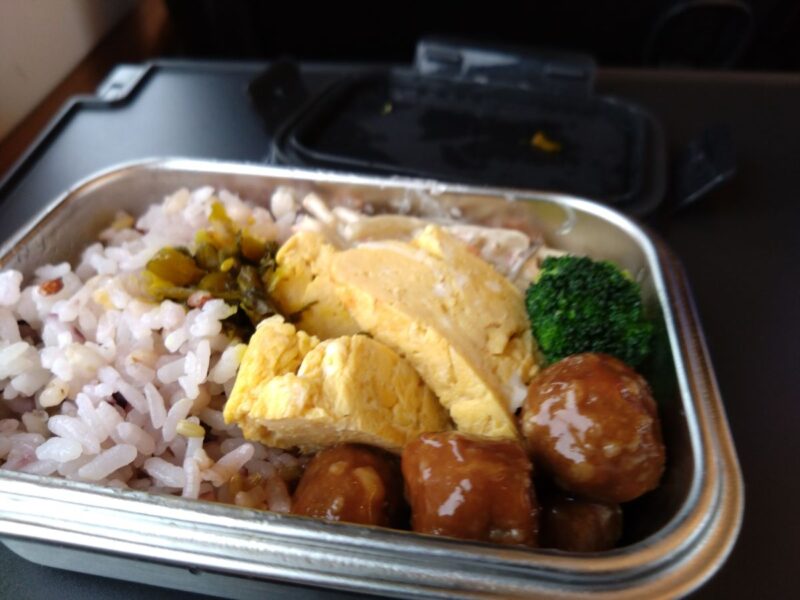
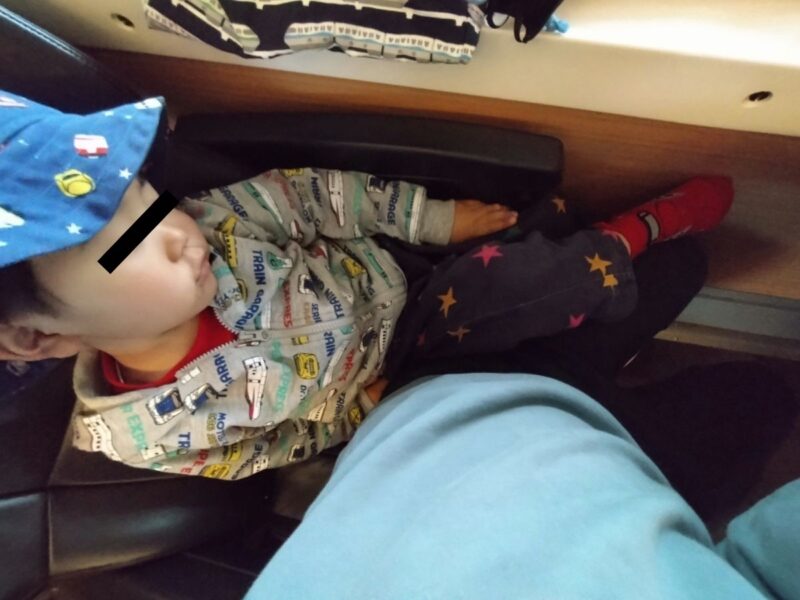
This is how it ended up in the end.
Sitting side by side simply wasn’t possible.Interestingly, sitting at a slight angle—like how bicycles are parked diagonally to fit more in a space—actually gave us more room.Since the train wasn’t crowded, I could have had my child stand on the adjacent seat, but for the sake of testing, I tried different setups.In the end, I let my child take up most of the seat while I sat partially, and managed to eat the bento that way.
It’s worth noting that the Shiosai is usually not very crowded, which made this kind of arrangement possible.
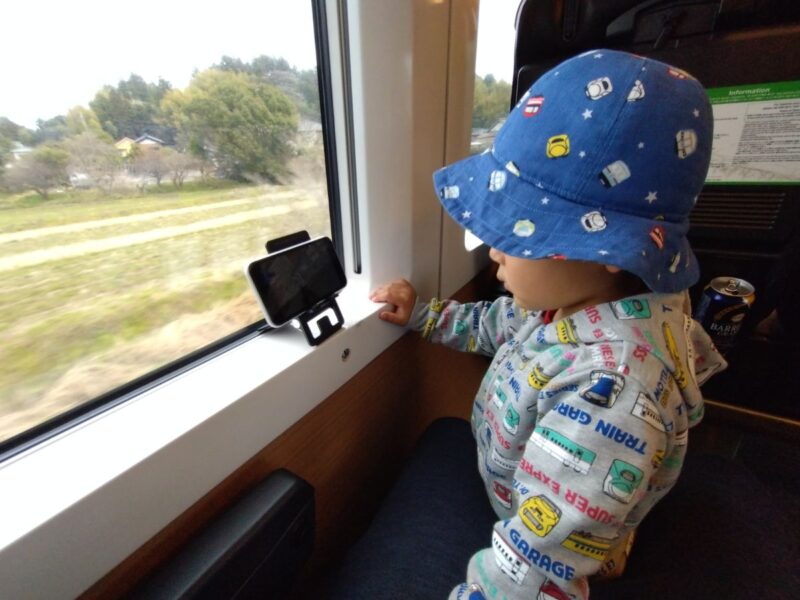
After finishing the bento, this is what it looked like. As long as you’re not eating, there’s plenty of space and it’s very comfortable. The Green Car really is spacious. There were only two other passengers in the entire car, one at the very front and one at the very back, so it was very quiet. I reclined the seat, sat back, and relaxed. I had already told my child that this was a train where they needed to stay especially quiet, so they calmly watched videos. Meanwhile, I enjoyed some cheese and slowly sipped a beer, and before I knew it, an hour had passed.
Inside the Green Car of a limited express train
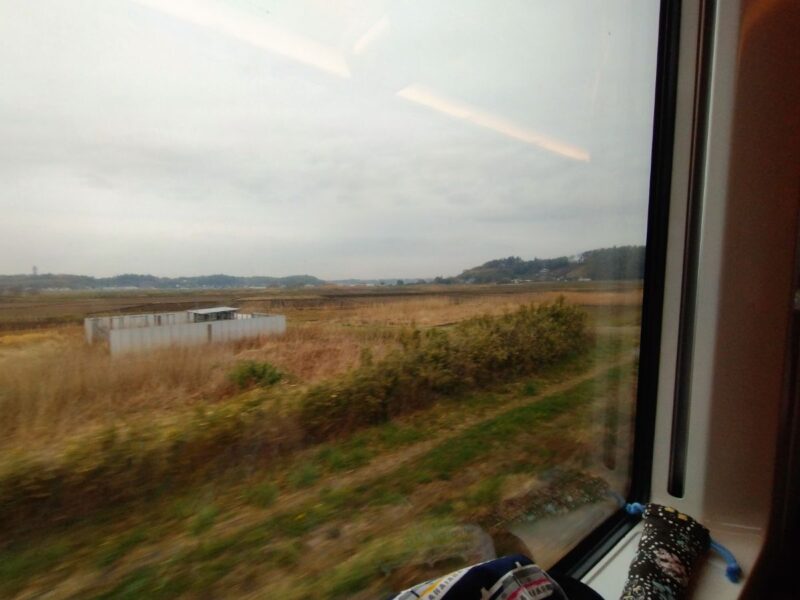
The view from the window was mostly like this—just stations, with little variation. My child quickly got bored, and there was no view of the sea.
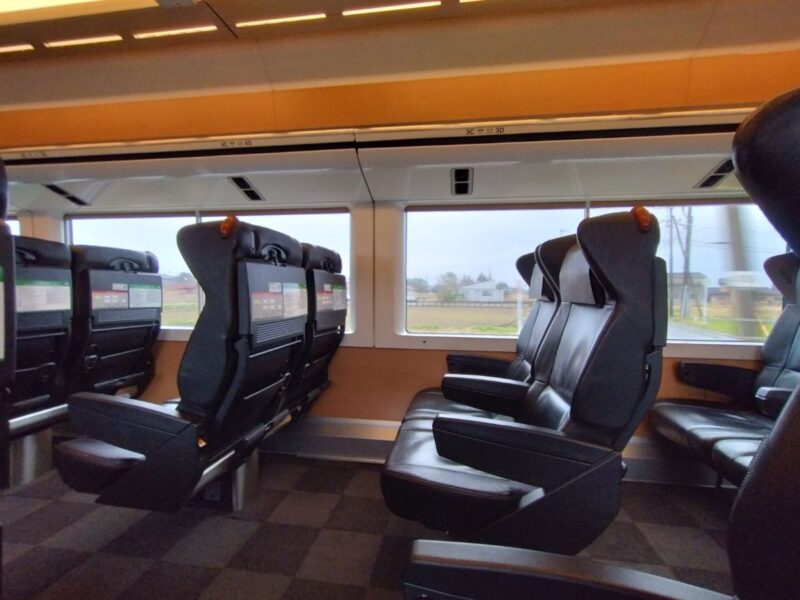
The seats are thick and upholstered in leather, like this.
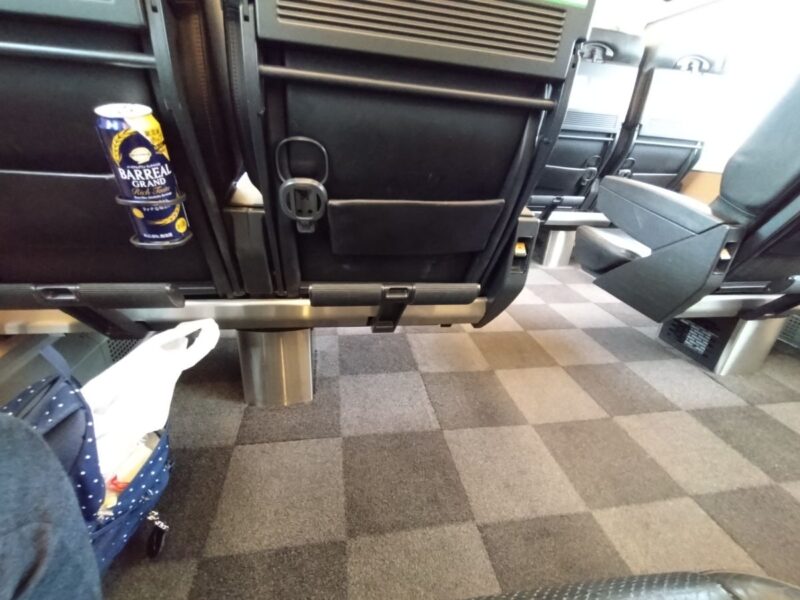
The floor is carpeted.
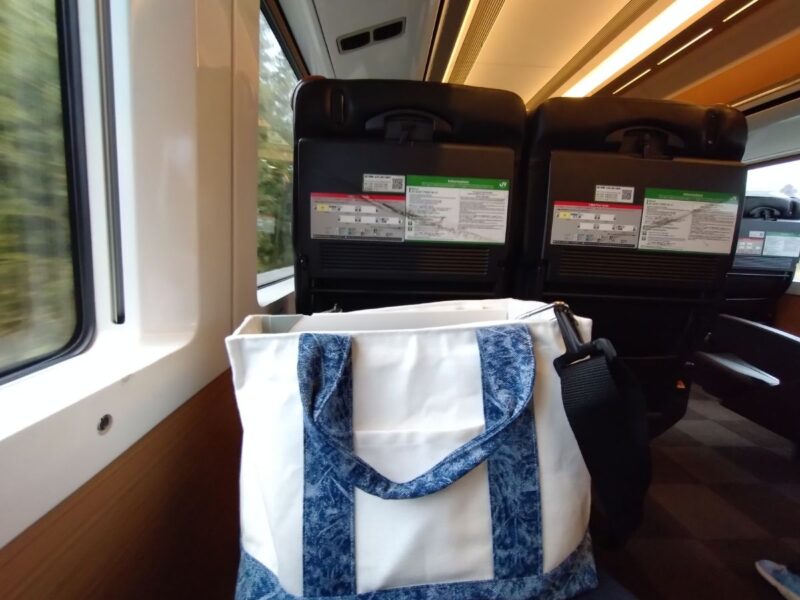
This is a bag from our “Tetsutabi Yomeko Goods” line—spacious, easy to use, and cute.
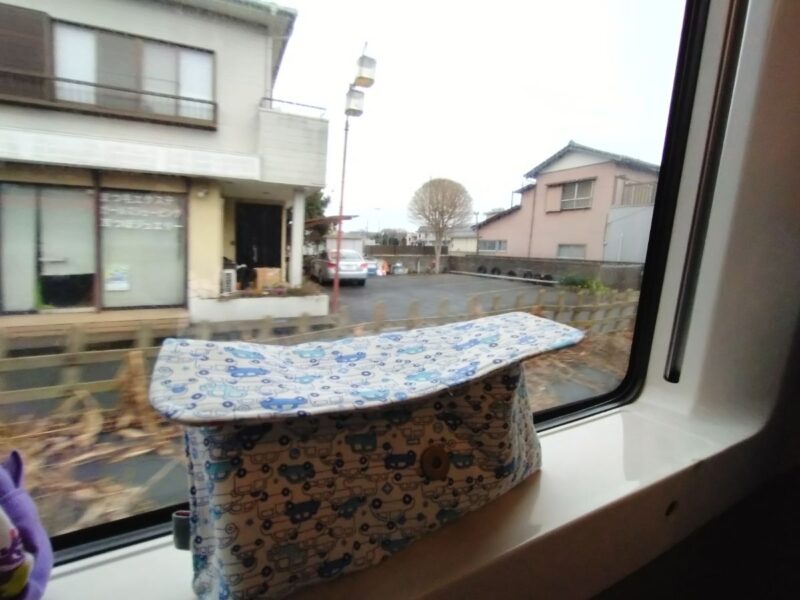
This is a small pouch from our “Tetsutabi Yomeko Goods” line. It fits a Nintendo Switch perfectly, and today I used it to carry my smartphone, a phone stand, and a portable Wi-Fi device.
Oomawari travel toward the Choshi area
I arrived at Iioka Station.
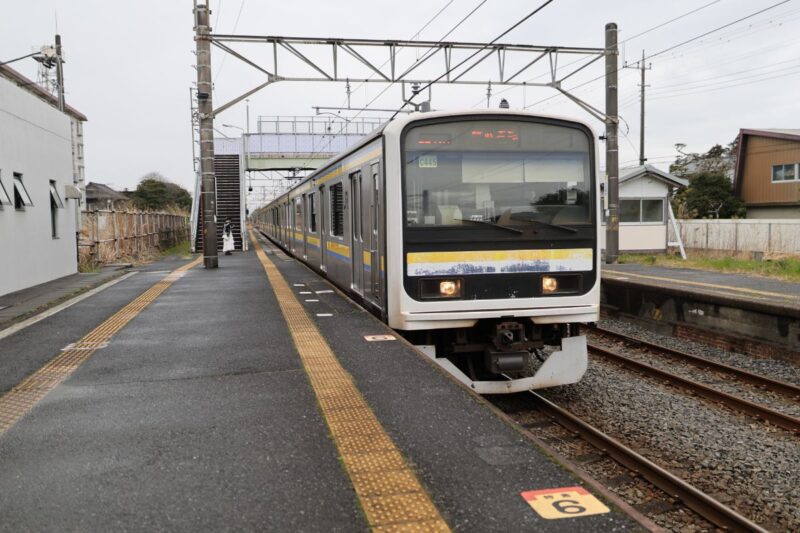
I transfer to a local train bound for Matsugishi.
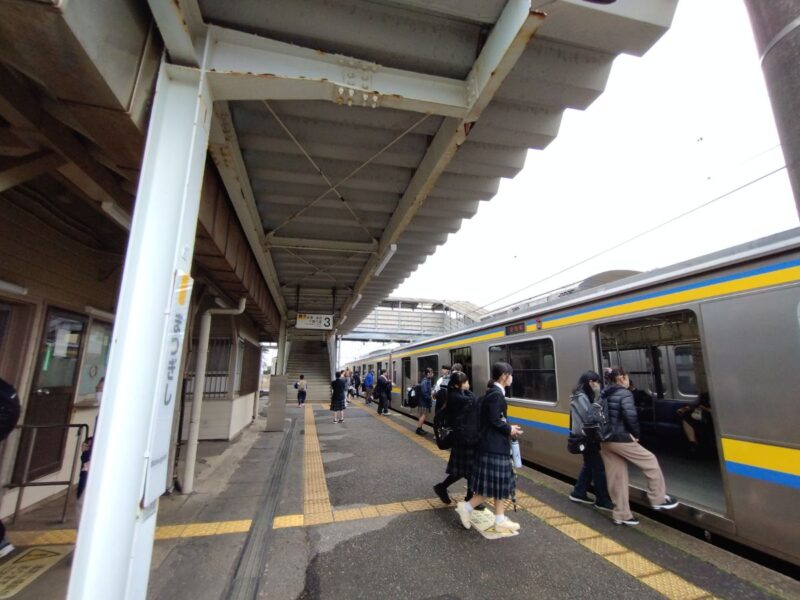
From Iioka, I headed toward Matsugishi. The transfer time at Matsugishi for the Narita Line toward the Narita area is quite short, so I moved quickly while gently urging my child, who doesn’t always move smoothly in transitions.
From here, it’s about an hour and a half on the train until we arrive at Narita at 13:40. Since I had already had a beer earlier, I did start to feel like I needed to use the restroom, but getting off midway would mean a long wait for the next train, so I decided to hold it.
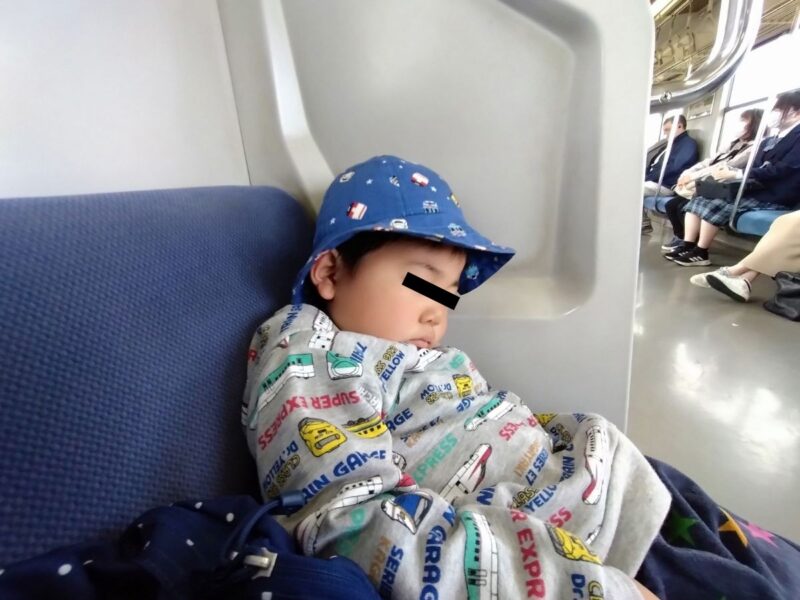
My child fell fast asleep.
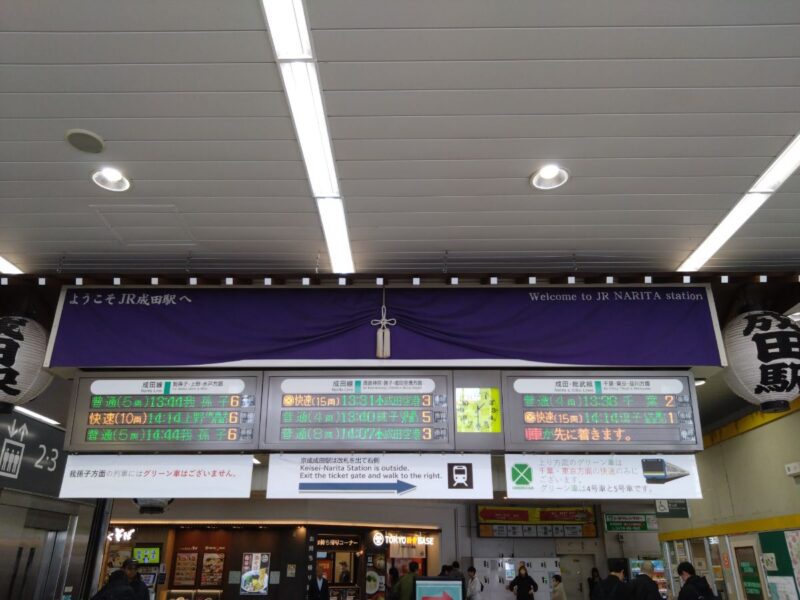
Arriving at Narita Station, I rushed to the restroom. The toilet was located toward the back in this image.
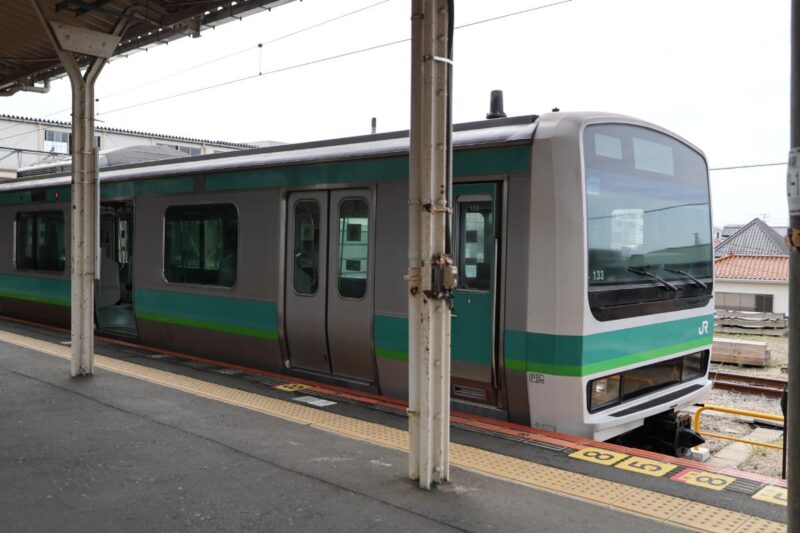
I boarded the train bound for Abiko from platform 6 at Narita Station.
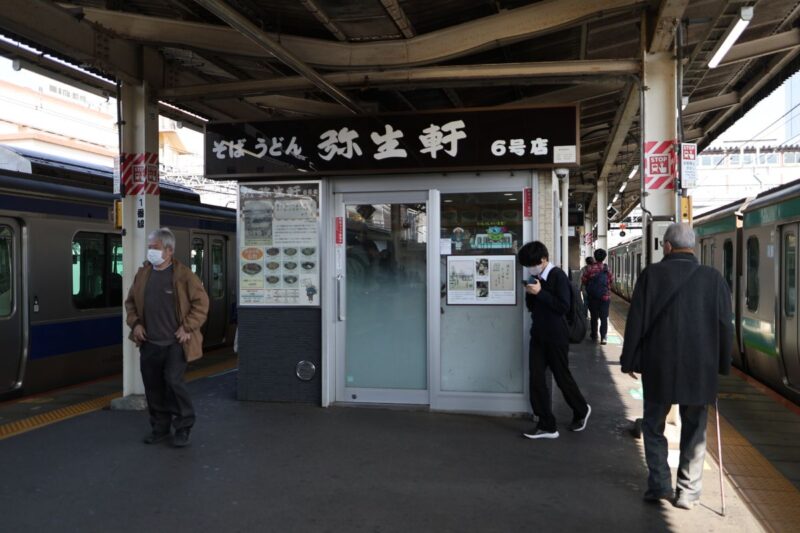
There was a standing soba and udon shop, a local specialty at Abiko Station. Its signature feature is an extremely large fried chicken served with the soba. I’d like to try it someday, but it doesn’t seem very suitable when traveling with a child.
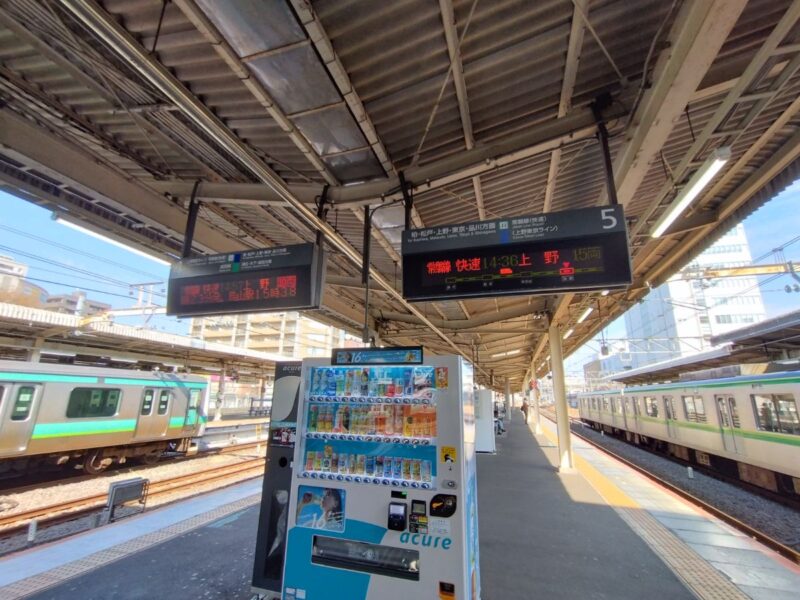
I took the Ueno–Tokyo Line to Ueno Station, then transferred to the Yamanote Line and headed to Akihabara.
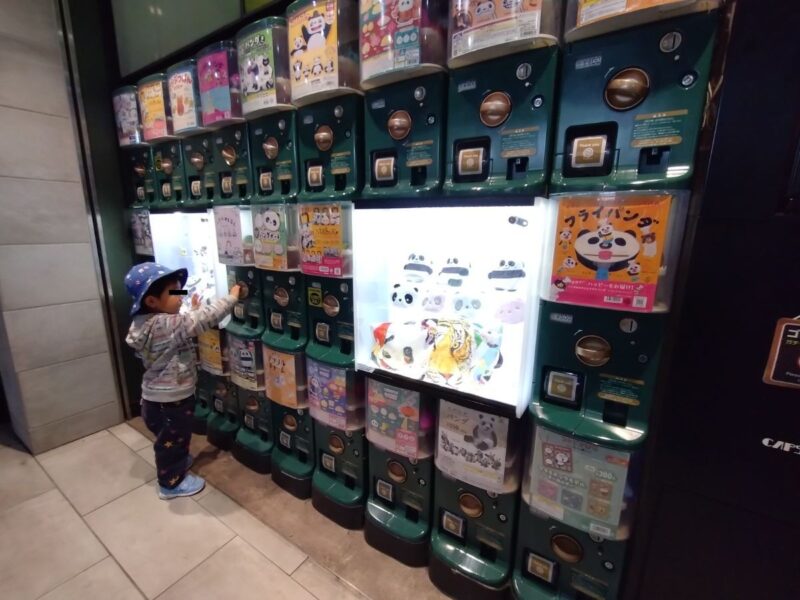
A man who always checks the gashapon machines.
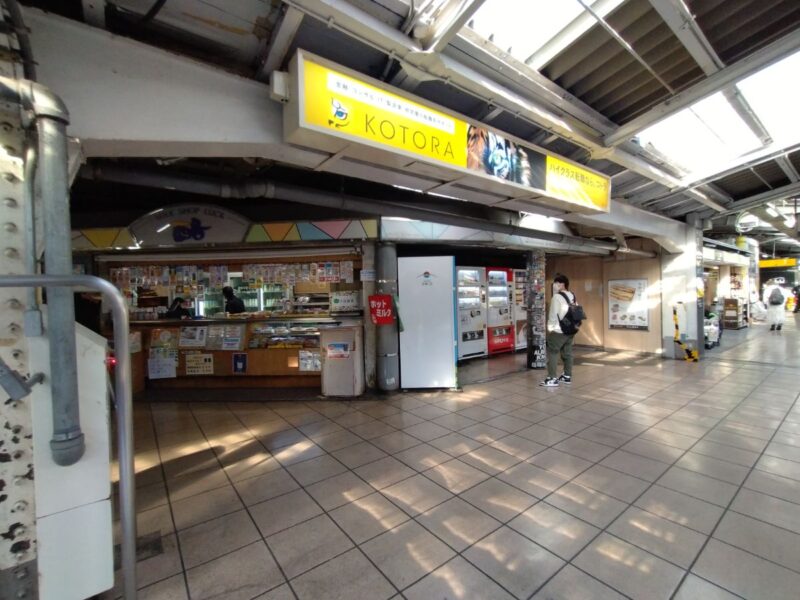
At 15:13, I returned to Raku Milk Shop in Akihabara. We had visited here earlier when my child first started showing interest in trains. It feels nostalgic, but my child didn’t seem to remember it and had no reaction.
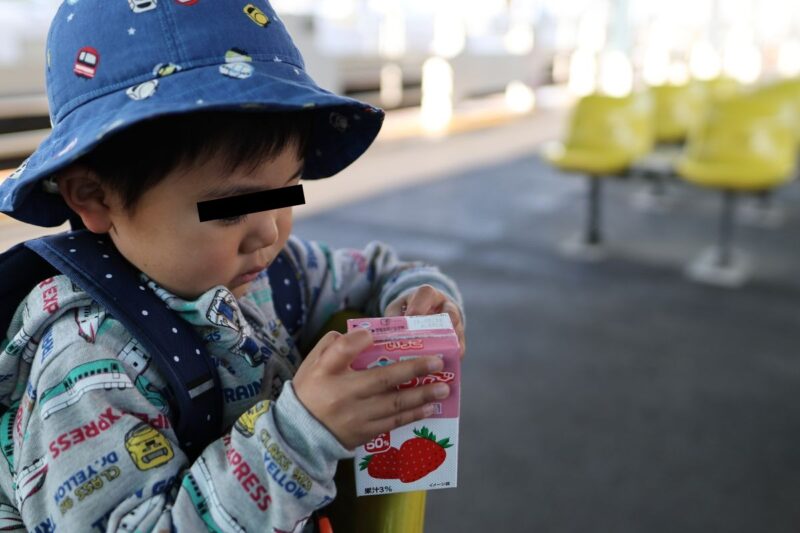
I took the Sobu Line from Akihabara to head home. By this point, I was quite tired and had lost most of my energy.
With a slightly relaxed departure in the morning and a return around 4 p.m., it turned into a well-balanced Oomawari trip that allowed us to enjoy train riding without overexertion.

