Top row Base fare
Bottom row: Shinkansen surcharge (reserved seat)
Tsubasa Shinkansen Fare Chart – Quick Reference
Fares and surcharges are shown separately.
Add the top and bottom amounts to get the total price.
| Distance from Tokyo (km) | Station Name | Tokyo | Ueno | Omiya | Oyama | Utsunomiya | Nasushiobara | Shin-Shirakawa | Koriyama | Fukushima | Yonezawa | Takahata | Akayu | Kaminoyama-Onsen | Yamagata | Tendo | Sakuranbo-Higashine | Murayama | Oishida |
|---|---|---|---|---|---|---|---|---|---|---|---|---|---|---|---|---|---|---|---|
| 421.4 | Shinjo | 7,480 5,850 | 7,480 5,640 | 6,930 5,640 | 6,270 4,750 | 5,720 4,750 | 5,060 4,750 | 4,180 3,980 | 3,520 2,990 | 2,750 2,110 | 2,090 2,110 | 1,790 1,660 | 1,790 1,660 | 1,410 1,660 | 1,230 1,660 | 910 1,290 | 810 1,290 | 720 1,290 | 440 1,290 |
| 399.5 | Oishida | 6,930 5,850 | 6,930 5,640 | 6,600 5,640 | 5,720 4,750 | 5,390 4,750 | 4,620 4,750 | 3,850 3,980 | 3,190 2,990 | 2,420 2,110 | 1,600 1,660 | 1,410 1,660 | 1,410 1,660 | 1,040 1,660 | 720 1,290 | 530 1,290 | 350 1,290 | 260 1,290 | |
| 336.5 | Murayama | 6,930 5,850 | 6,930 5,640 | 6,270 5,640 | 5,720 4,750 | 5,060 4,750 | 4,180 4,750 | 3,850 3,980 | 2,750 2,990 | 2,090 2,110 | 1,410 1,660 | 1,230 1,660 | 1,040 1,660 | 720 1,290 | 530 1,290 | 260 1,290 | 200 1,290 | ||
| 393.3 | Sakuranbo-Higashine | 6,930 5,850 | 6,930 5,640 | 6,270 5,640 | 5,720 4,750 | 5,060 4,750 | 4,180 4,750 | 3,520 3,980 | 2,750 2,990 | 2,090 2,110 | 1,230 1,660 | 1,040 1,660 | 1,040 1,660 | 620 1,290 | 440 1,290 | 210 1,290 | |||
| 373.2 | Tendo | 6,600 5,850 | 6,600 5,640 | 6,270 5,640 | 5,390 4,750 | 5,060 4,750 | 3,850 4,750 | 3,520 3,980 | 2,750 2,990 | 2,090 2,110 | 1,230 1,660 | 1,040 1,660 | 810 1,290 | 530 1,290 | 260 1,290 | ||||
| 359.9 | Yamagata | 6,270 5,400 | 6,270 5,190 | 5,940 5,190 | 5,060 4,300 | 4,620 4,300 | 3,850 4,300 | 3,190 3,530 | 2,420 2,540 | 1,600 1,660 | 910 1,290 | 720 1,290 | 620 1,290 | 260 1,290 | |||||
| 344.2 | Kaminoyama-Onsen | 6,270 5,400 | 6,270 5,190 | 5,720 5,190 | 5,060 4,300 | 4,180 4,300 | 3,520 4,300 | 3,190 3,530 | 2,420 2,540 | 1,410 1,660 | 620 1,290 | 530 1,290 | 350 1,290 | ||||||
| 329.1 | Akayu | 5,940 5,400 | 5,940 5,190 | 5,390 5,190 | 4,620 4,300 | 3,850 4,300 | 3,190 4,300 | 2,750 3,530 | 2,090 2,540 | 1,040 1,660 | 350 1,290 | 210 1,290 | |||||||
| 322.7 | Takahata | 5,940 5,030 | 5,940 4,820 | 5,390 4,820 | 4,620 3,930 | 3,850 3,930 | 3,190 3,930 | 2,420 3,160 | 1,790 2,170 | 910 1,290 | 210 1,290 | ||||||||
| 312.9 | Yonezawa | 5,720 5,030 | 5,720 4,820 | 5,390 4,820 | 4,180 3,930 | 3,850 3,930 | 2,750 3,930 | 2,420 3,160 | 1,600 2,170 | 810 1,290 |
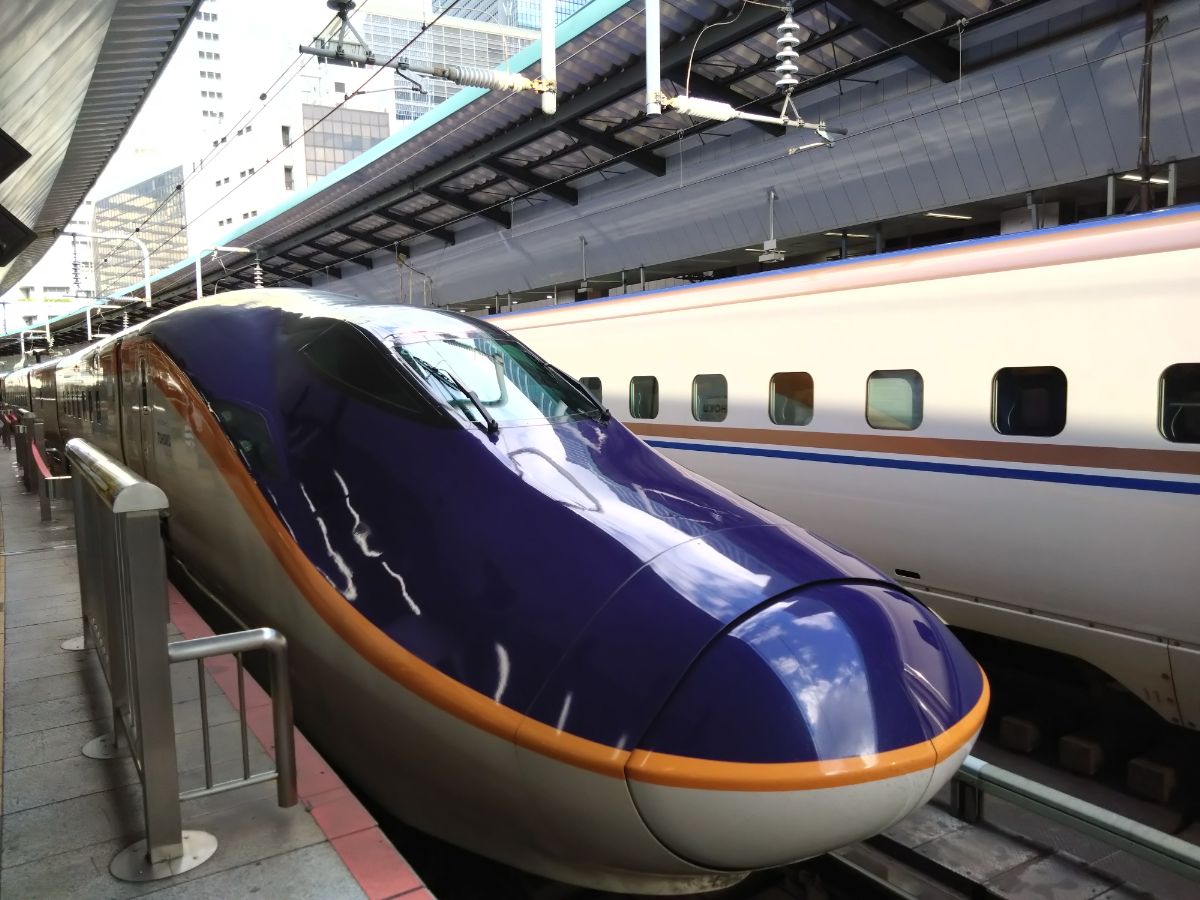
Yamagata Shinkansen “Tsubasa” Overview
- The Yamagata Shinkansen “Tsubasa” connects Tokyo with Yamagata and Shinjo.Between Tokyo and Fukushima, it runs coupled with the Yamabiko Shinkansen.
- At Fukushima Station, the trains are separated, and Tsubasa continues toward Yamagata and Shinjo.
- From Fukushima onward, Tsubasa operates on a “mini-shinkansen” section, using conventional railway tracks on the Ou Main Line.
- All seats on Tsubasa are reserved. There are no non-reserved seats, and a reserved seat ticket is required to board.
- If all seats are sold out, a special ticket may be available that allows passengers to stand in areas such as the deck.This ticket does not include an assigned seat, and passengers are expected to stand for the journey.

