
This time as well, I decided to go out for ramen after watching a popular Japanese YouTube food channel.
The destination was Sugitaya, known as the holy ground of Yokohama Iekei ramen. While the channel visited the Chiba Yūkō branch,I visited the main branch in Yokohama for lunch on a weekday.
Based on my own experience, I’ll give a detailed report on the atmosphere of the shop, including how easy it is for a woman to enter and dine alone.

How to Get to Sugitaya Main Store (3 minutes from Shin-Sugita Station)
The shop is located just a short walk from JR Shin-Sugita Station. From Yokohama Station, it takes about 30 minutes on the JR Negishi Line bound for Ofuna to reach Shin-Sugita Station.
- Exit the ticket gates at Shin-Sugita Station, then go down the stairs on the right toward the West Exit.
- Once outside the station, continue straight ahead to the right.
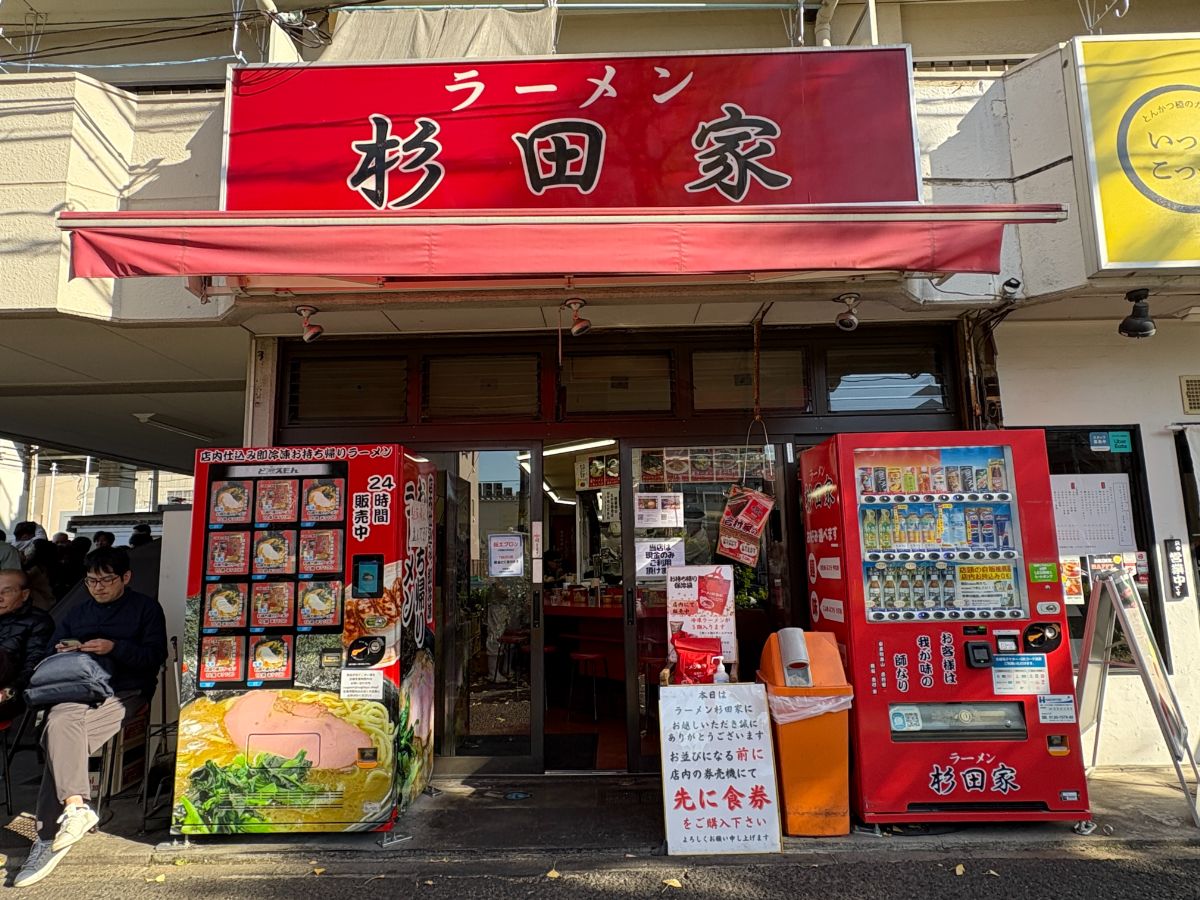
- After about a three-minute walk, you’ll see the Sugitaya sign on your right-hand side.
After getting off the train, first head toward the West Exit.

Once you exit the station, turn right and continue straight.

Walk straight ahead for about three minutes.

Sugitaya Ramen comes into view.

Important: Buy a Meal Ticket Before Lining Up — This Is the Sugitaya Rule
When I arrived around 11 a.m., there didn’t seem to be many people in front of the shop at first glance. I briefly thought, “Maybe it’s quiet because it’s a weekday?”
In reality, there was already a long line extending further inside.
At Sugitaya, you’re required to buy your meal ticket first, and only then join the line.

A U-Shaped Line Spreading Across the Parking Lot
The parking lot right next to the shop was being used as a waiting area.
The line, guided by plastic tape and arranged in a U-shape, reminded me of waiting for a ride at an amusement park.
Estimated Waiting Time
I started lining up around 11:00 a.m. and was able to enter the shop at 12:05, meaning about a one-hour wait even on a weekday afternoon. Since the waiting area is in a shaded parking lot, it’s a good idea to dress warmly in winter or on cold days. I also saw one person waiting with a baby stroller.
While you’re still in line, a staff member will ask about your preferences for noodle firmness, flavor strength, and oil level. This time, I ordered everything as regular.
Ticket Machine
The ticket machines are located just inside the shop, on both the left and right sides. Please note that they accept cash only.

A plastic, color-coded ticket came out. It seems the colors are used to identify the menu items.

This time, I chose four items: chashu ramen, rice, seasoned egg, and nori.
Inside the Shop and Service
I was shown to my seat inside the shop. It seems that several customers are seated at once in batches. I was guided to a seat at the very end, perhaps because the staff thought it would be more comfortable for a woman dining alone.Looking around, everyone had placed their meal tickets on the counter and was waiting for their food to arrive. At Sugitaya, this seems to be the unspoken rule.I put my meal ticket on the counter and waited for the ramen to arrive.

Tasting Sugitaya Ramen
Finally, the ramen has arrived!

Sugitaya Ramen Tasting
Every component—the broth, noodles, chashu, and nori—is top-notch, making this bowl absolutely worth the one-hour wait.
Broth
The soy sauce flavor is sharp and well-defined. It’s rich without being too heavy, and you can easily keep drinking it.
Noodles
The noodles are medium-thick, curly, and pleasantly chewy. Many of the male customers around me ordered theirs firm, so firmness might be a popular choice.
Chashu
The chashu appears to be carefully smoked to achieve the perfect level of doneness. You can tell a lot of effort goes into it—it’s delicious.
Nori
The nori is exceptionally flavorful. It’s perfect to dip in the broth and wrap around rice for a fantastic bite.
| Shop Name | Ramen Sugitaya Main Store |
| Address | 3-5 Shinsugita-cho, Isogo-ku, Yokohama, Kanagawa, Japan |
| Opening Hours | 5:00 AM – 10:30 PM |
| Closed | Sunday |
| Access | About a 3-minute walk from Shin-Sugita Station (JR Negishi Line) |
| Parking | None |
| Map |
After finishing the meal, I stretched my legs a bit and took a stroll around Yokohama Chinatown before heading back. If you’re traveling on the JR Negishi Line, get off at Ishikawacho Station—it’s just a short walk to the bustling streets of Chinatown. It takes about 15 minutes by train from Sugitaya. Walking around Chinatown is a perfect way to digest after a hearty bowl of ramen, making it a highly recommended course. |

